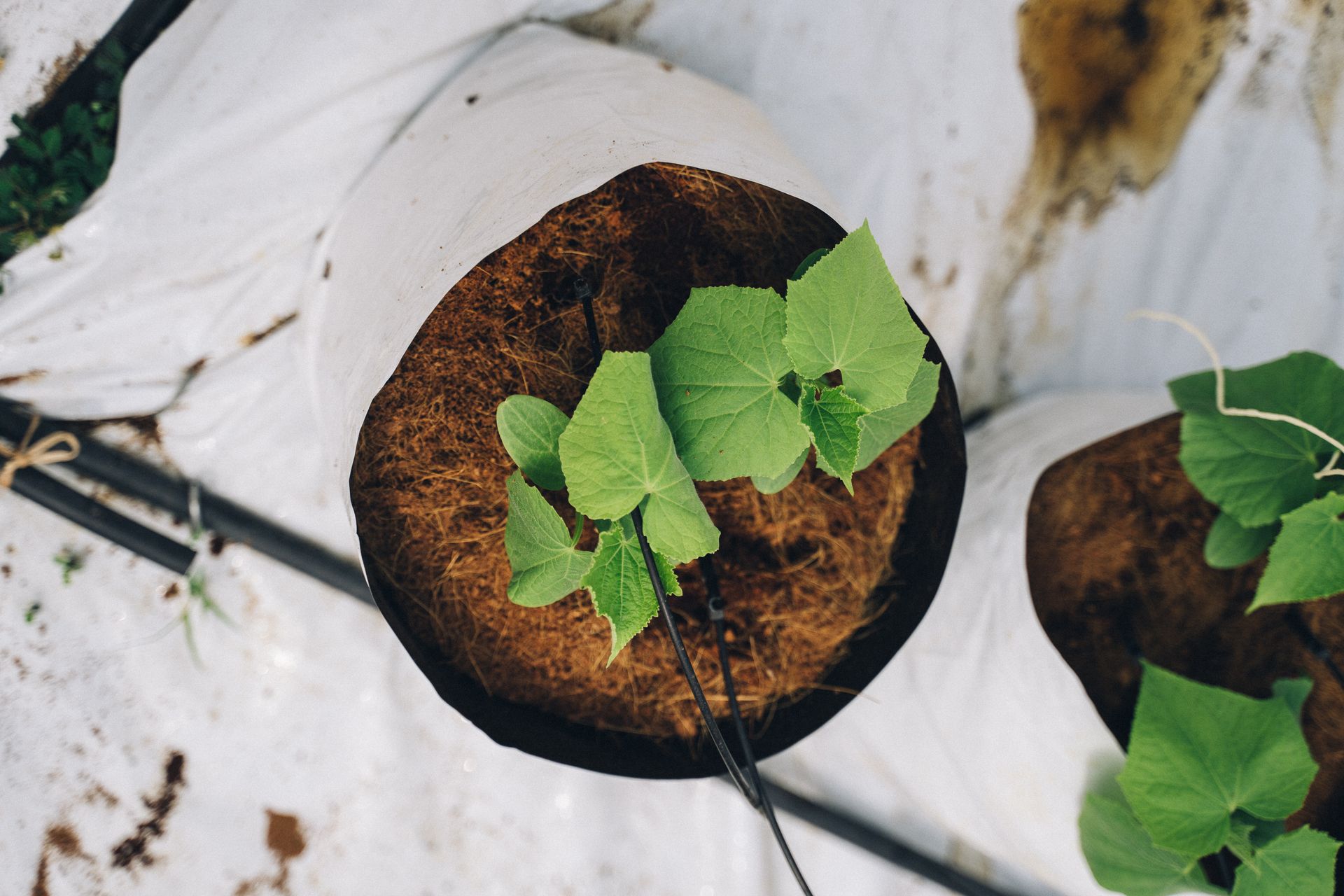
Cocopeat is widely used as a growing medium in horticulture, nurseries, and soilless cultivation. However, not all cocopeat has the same physical structure. Some products contain mostly fine, powder-like coir pith, while others contain coarser particles and visible coconut fibers.
These differences are important because particle size and fiber content influence how a growing medium holds water, allows air to circulate around roots, and drains excess moisture. Understanding these characteristics can help growers and agricultural businesses select the right cocopeat for their applications.
What Are Fine Coir Pith and Coarse Coconut Fibers?
Cocopeat, also known as coir pith or coir dust, is obtained from the fibrous husk of coconuts during coconut fiber processing. The material can contain different proportions of fine pith, short fibers, and larger pieces of coconut husk.
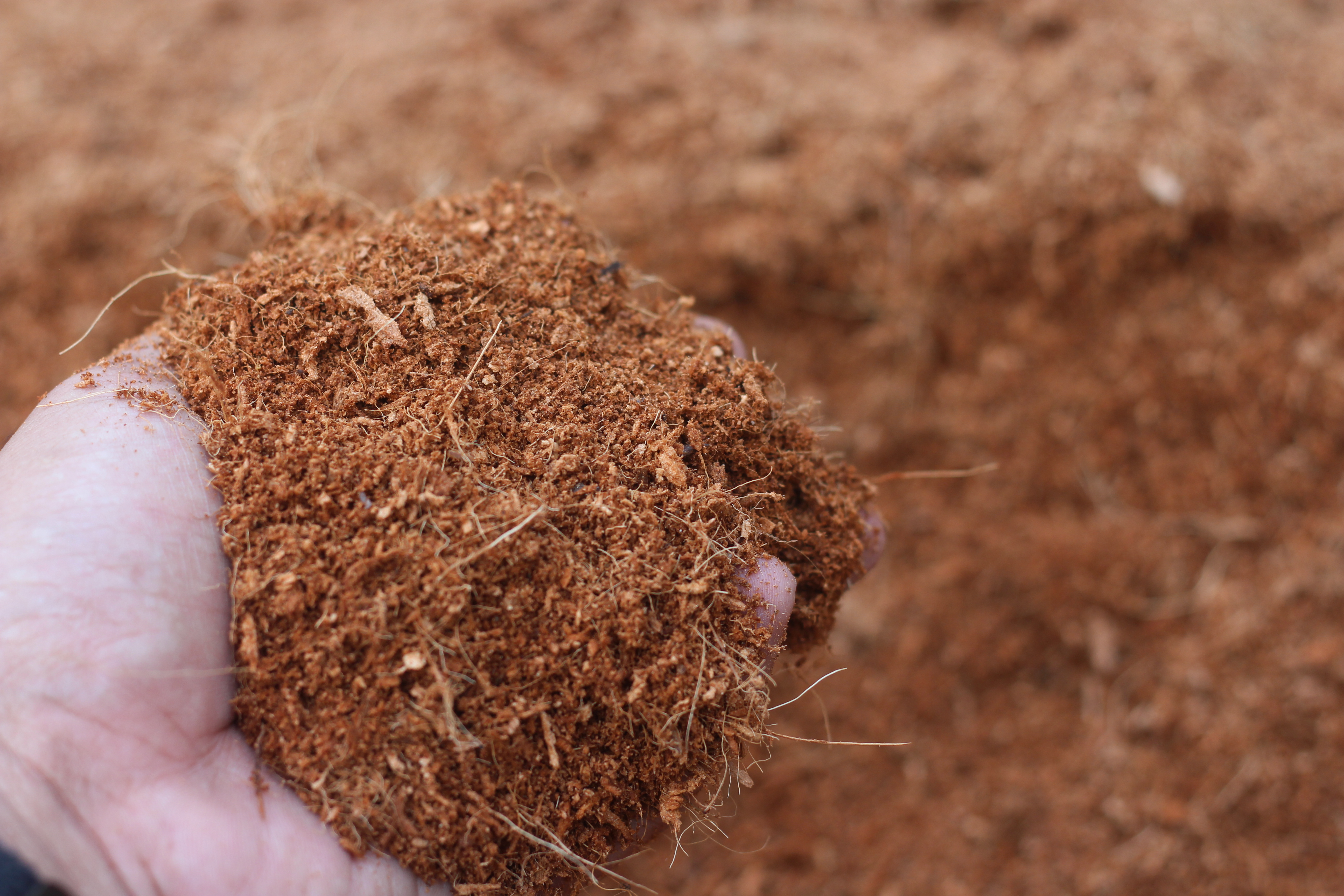
Fine coir pith consists of small, soft particles with a texture similar to loose, spongy soil. Its structure provides numerous small spaces that can retain water, making it useful for applications where moisture availability is important.
Coarse coconut fibers and larger particles have a more open structure. They can create larger air spaces within a growing medium, helping excess water drain and allowing oxygen to reach plant roots. However, their water-retention capacity may be lower than that of finer material.
Research on coconut coir dust has shown that particle-size distribution significantly affects the balance between water retention and air content in growing media.
How Particle Size Affects Water Retention and Aeration
A growing medium needs to provide both water and oxygen. Plants require water for nutrient transport and growth, while their roots need oxygen for respiration.
Fine and coarse cocopeat influence this balance in different ways.
Fine cocopeat: Greater moisture retention
Fine particles generally retain more water because of their smaller pore spaces and greater surface area relative to their volume. This can be beneficial for seedling production, propagation, and growing systems that require consistent moisture.
However, a medium containing too many fine particles may retain excessive water under certain growing conditions, reducing the air available to roots. The actual result also depends on compaction, container dimensions, irrigation practices, and the material's overall structure.
Coarse material: More air space and drainage
Coarser particles and coconut fibers can create larger pores that help air circulate and water move through the medium. This can be useful for crops or growing systems that require good drainage and root-zone aeration.
Nevertheless, a very coarse medium may not retain enough readily available water for some plants. Irrigation frequency and system design may therefore need adjustment.
The goal is not simply to choose the finest or coarsest material. It is to achieve a suitable balance between moisture retention and aeration.
Which Cocopeat Structure Is Best for Your Application?
The right choice depends on the crop, cultivation method, and irrigation system.
- Seedling production and propagation: Fine, well-structured cocopeat can help maintain consistent moisture around developing roots.
- Potted plants and nursery production: A balanced mixture of fine pith and coarser particles may provide both water retention and aeration.
- Hydroponic and soilless cultivation: Particle structure should match the crop's water requirements, irrigation frequency, and growing-system design.
- Custom growing-media blends: Cocopeat can be combined with materials such as coco chips, perlite, or other suitable components to adjust drainage, air space, and water retention.
These are general guidelines rather than fixed rules. Crop requirements, container height, irrigation management, and the characteristics of the complete growing medium all affect performance.
Why Consistency Matters in Commercial Cocopeat
For commercial growers, particle size is not only a matter of plant performance. Consistency between batches also matters.
When particle distribution varies considerably, a growing medium may behave differently in terms of water retention, drainage, and aeration. This can make irrigation management less predictable, especially in large-scale nurseries and greenhouse operations.
Buyers should therefore consider more than appearance alone. Useful quality checks include particle-size distribution, the proportion of pith and fiber, moisture content, impurities, expansion volume, and the physical behavior of the material after hydration.
For international buyers, clear product specifications and consistent processing are particularly important when sourcing cocopeat in bulk.
Sourcing Cocopeat from Indonesia
Indonesia's coconut industry provides raw materials for a range of coconut-derived products, including cocopeat, coco fiber, coco chips, and other agricultural materials.
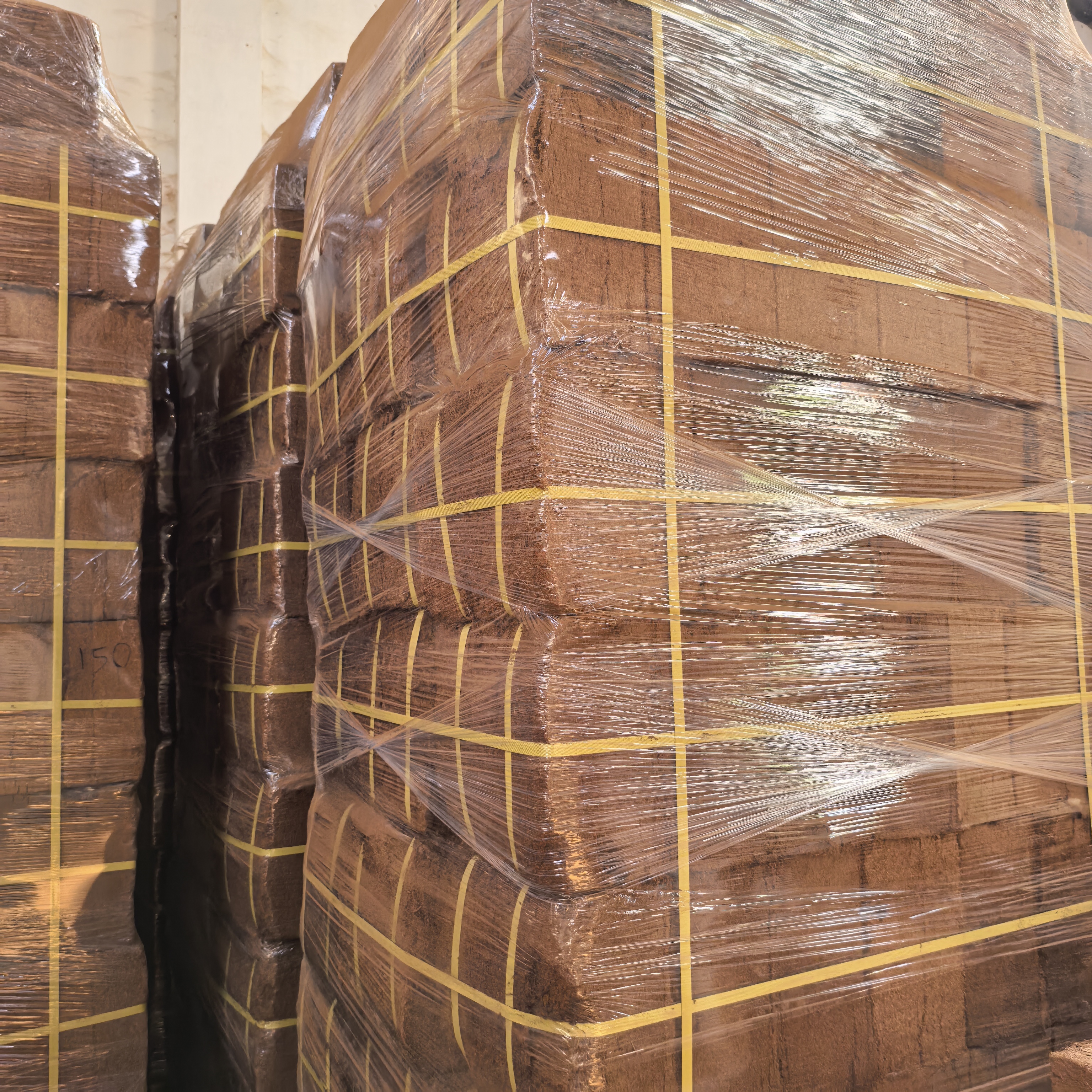
Binaya Indie Global, based in Central Java, Indonesia, supplies coconut-based products for international markets, including Low EC and High EC cocopeat blocks. Buyers can discuss their intended application, preferred product form, and technical requirements when evaluating a suitable specification.
Selecting cocopeat should begin with understanding the growing system and the balance of water and air that the plants need. By paying attention to particle structure and product consistency, growers and importers can make more informed sourcing decisions.
Conclusion
Fine coir pith and coarse coconut fibers serve different purposes within a growing medium. Fine particles generally support greater water retention, while coarser components can increase air space and improve drainage. The most suitable structure depends on the crop, container, irrigation method, and desired growing conditions.
For growers and commercial buyers, understanding these differences is a practical step toward choosing cocopeat that meets their agricultural and operational needs.
Notes
- Patricia Noguera, Manuel Abad, Ángel Puchades, Ángel Maquieira, and Vicente Noguera, “Influence of Particle Size on Physical and Chemical Properties of Coconut Coir Dust as Container Medium,” Communications in Soil Science and Plant Analysis 34, nos. 3–4 (2003): 593–605, https://doi.org/10.1081/CSS-120017842.
- Patricia Noguera et al., “Physical Properties of Various Coconut Coir Dusts Compared to Peat,” HortScience 38, no. 1 (2003): 123–29.
Bibliography
Noguera, Patricia, Manuel Abad, Ángel Puchades, Ángel Maquieira, and Vicente Noguera. “Influence of Particle Size on Physical and Chemical Properties of Coconut Coir Dust as Container Medium.” Communications in Soil Science and Plant Analysis 34, nos. 3–4 (2003): 593–605. https://doi.org/10.1081/CSS-120017842.
Noguera, Patricia, Manuel Abad, Rafael Puchades, Ángel Maquieira, and Vicente Noguera. “Physical Properties of Various Coconut Coir Dusts Compared to Peat.” HortScience 38, no. 1 (2003): 123–29.