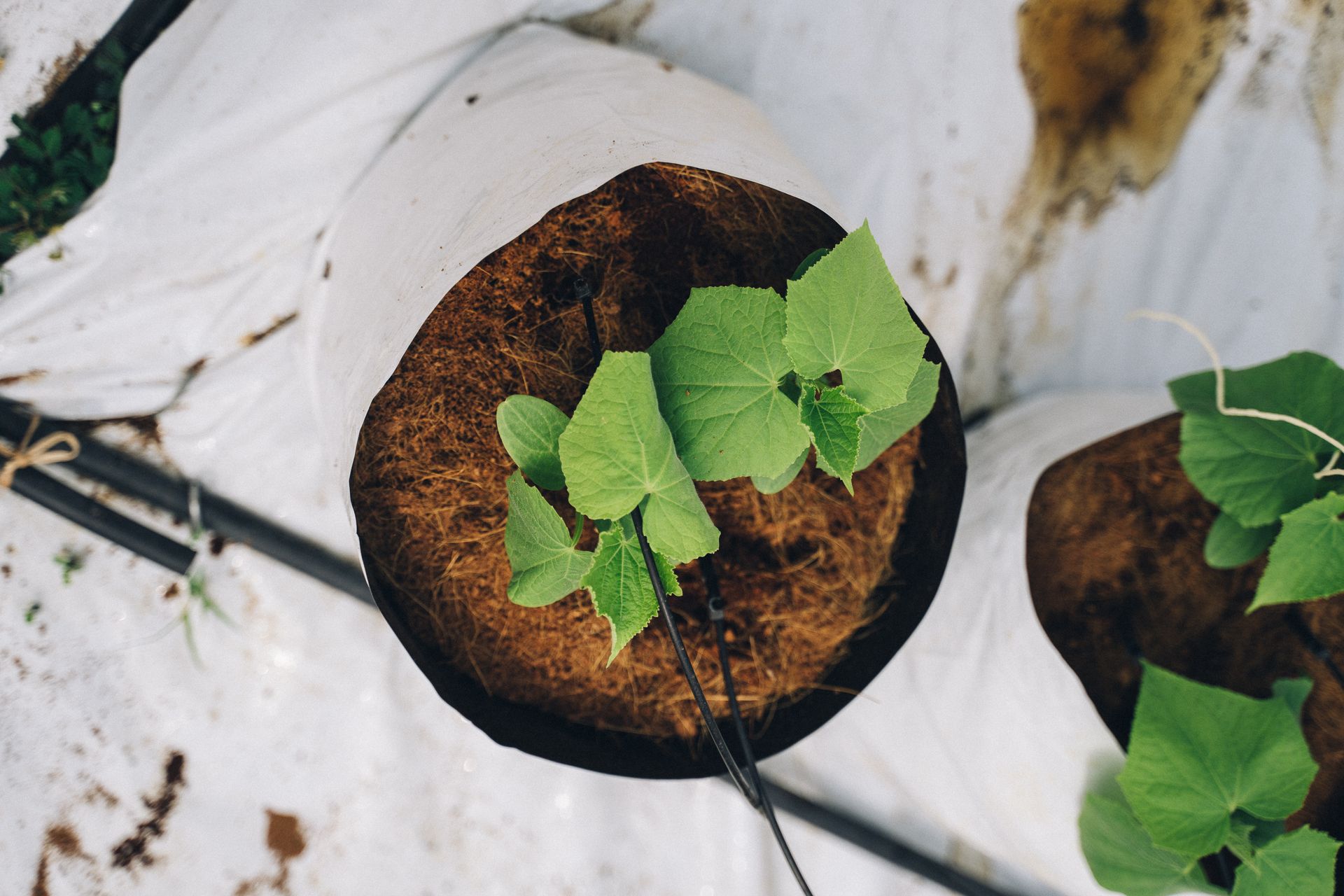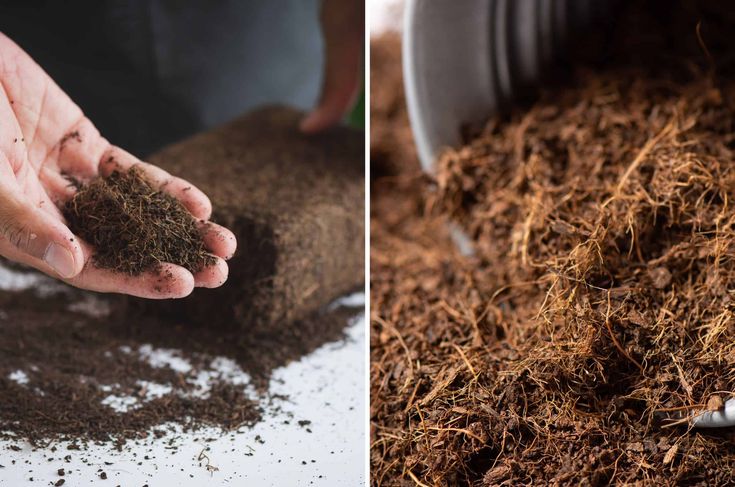
Cocopeat, also known as coir pith or coir dust, is a growing medium produced from coconut husk. Once considered mainly a by-product of the coconut industry, cocopeat is now widely used in horticulture because of its ability to retain moisture while maintaining air space around plant roots. Its physical and chemical properties can vary depending on the coconut source, processing method, particle size, and washing process.
Cocopeat is particularly useful for greenhouse cultivation, nurseries, hydroponics, gardening, and other horticultural applications. However, not all cocopeat has the same characteristics. For buyers and growers, factors such as EC, pH, moisture content, particle structure, expansion volume, and cleanliness are important when determining whether a cocopeat product is suitable for a particular application.
What Makes Good Quality Cocopeat?
Good-quality cocopeat should be evaluated according to its intended application rather than appearance alone. Electrical conductivity (EC) is one of the most important parameters because it indicates the level of soluble salts in the growing medium. Coconut coir can naturally contain salts, and the level can be affected by how the husk is processed and washed.
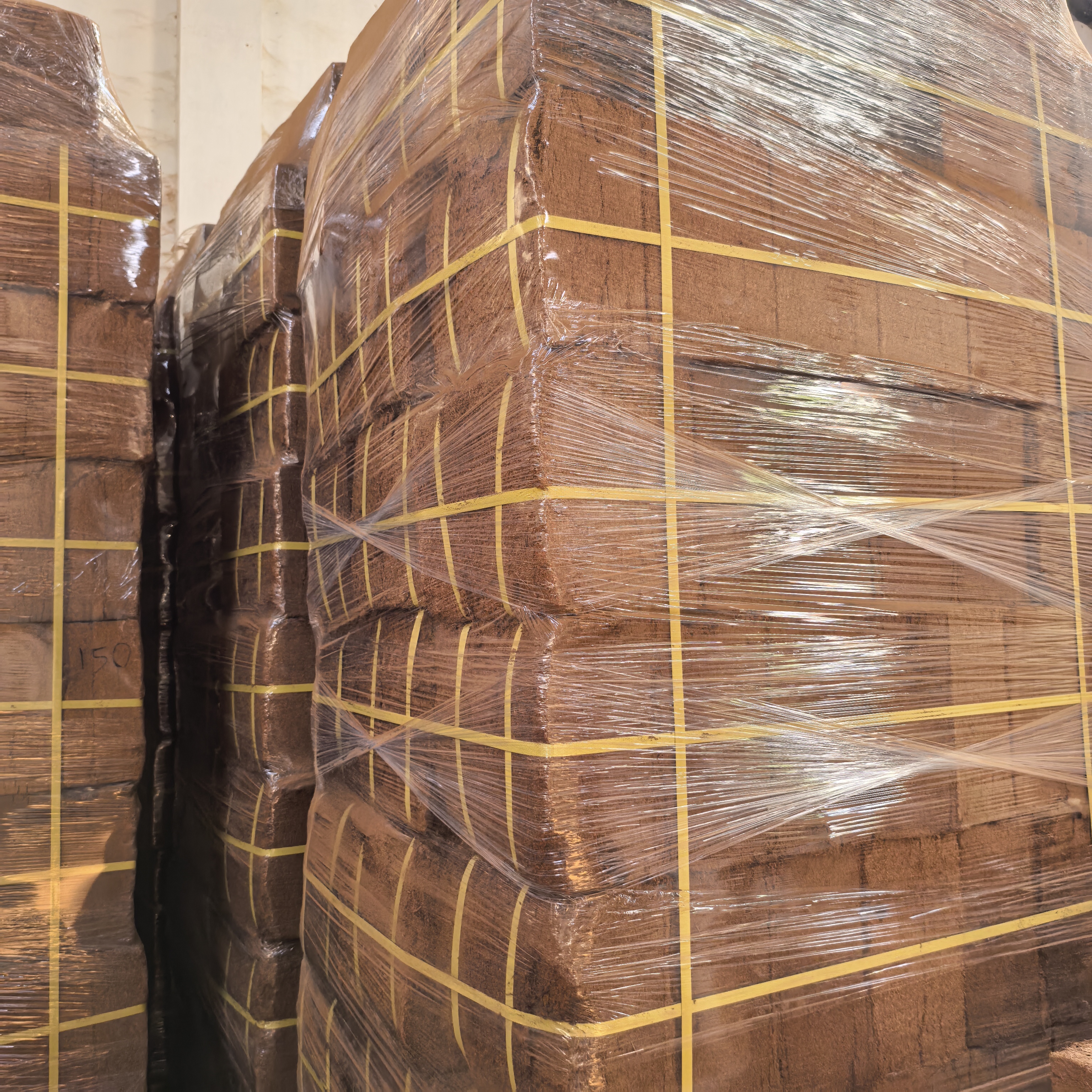
The pH of cocopeat is another important consideration because it can influence nutrient availability. Coco coir is generally slightly acidic, although the actual pH can vary depending on processing and product characteristics. Moisture content, particle structure, and expansion volume are also relevant, particularly when cocopeat is supplied in compressed blocks for international shipment.
Low EC and High EC Cocopeat Blocks
Cocopeat can be processed to achieve different EC levels, giving buyers options according to their cultivation system and nutrient-management practices.
Low EC Cocopeat Block is washed more extensively to reduce soluble salts. It is suitable for applications where growers require greater control over the root-zone environment, particularly in greenhouse, nursery, and commercial horticultural systems.
High EC Cocopeat Block undergoes a lower level of washing and therefore retains a higher level of soluble salts. It can be suitable for applications where the grower has an appropriate irrigation and nutrient-management system. The suitability of high-EC cocopeat should be considered based on the crop, cultivation method, and required growing-medium characteristics.
This means that high EC does not automatically mean poor quality, just as low EC does not automatically make a product suitable for every application. The right specification depends on how the cocopeat will be used.
How to Choose Cocopeat
When purchasing cocopeat, buyers should look beyond the product name and request clear technical specifications. EC, pH, moisture, expansion volume, particle size, and impurity levels provide a better basis for comparing products from different suppliers.
For example, Binaya Indie Global supplies 5 kg Cocopeat Blocks in both Low EC and High EC options. Our Low EC specification includes EC below 0.5 mS/cm, pH 5.0–6.0, moisture below 15%, and approximately 70 liters of expansion per block. Product specifications for High EC can be discussed according to the buyer's required application and specification.
Cocopeat from Indonesia
Indonesia's extensive coconut resources provide a strong raw-material base for the production of coconut-based growing media. Coconut husk can be processed into cocopeat while other parts of the husk can be transformed into products such as cocofiber, cocobristle, and cocorope.
For international buyers, understanding the characteristics of cocopeat is important when selecting a supplier. Rather than simply asking whether a product is “cocopeat,” buyers can evaluate the EC level, pH, moisture, expansion, processing method, and intended application to find a product that matches their requirements.
Conclusion
Cocopeat is a versatile growing medium, but quality should be evaluated based on technical characteristics and intended use. Low EC and High EC cocopeat serve different requirements, and neither should be considered universally better. By understanding EC, pH, moisture, expansion, and other specifications, growers and importers can make more informed purchasing decisions.
At Binaya Indie Global, we supply both Low EC and High EC Cocopeat Blocks for international buyers and can discuss specifications according to application and market requirements.
Notes
- University of Florida IFAS Extension, “Common Media Used in Hydroponics,” UF/IFAS Extension, accessed September 18, 2026. The publication describes coconut coir as an organic growing medium with high water-holding capacity, good aeration, and a generally slightly acidic pH of approximately 5.5–6.8.
- Dharti Thakulla, Bruce Dunn, and Bizhen Hu, “Soilless Growing Mediums,” Oklahoma State University Extension, September 2021. The authors explain that coconut coir can retain moisture while providing root aeration, but that insufficiently washed coir may contain excessive salts and require washing before use.
- University of Florida IFAS Extension, “Common Media Used in Hydroponics.” The publication notes that coco coir can be sold as loose media or compressed products and that compressed coir expands after soaking.
- University of Utah Extension, “Commercially Available Products to Increase Soil Water-Holding Capacity for Gardens and Landscapes,” Utah State University Extension. The source discusses coconut coir's water-holding capacity, particle-size differences, and physical properties.
- University of Florida IFAS Extension, “Moisture Retention and Chemical Properties of Nursery Potting Substrates,” UF/IFAS Extension. The study compares coconut fiber with other growing-media materials and reports its water-retention, pH, and EC characteristics.
- University of Florida IFAS Extension, “Water and Nutrient Management Guidelines for Greenhouse Hydroponic Vegetable Production in Florida.” The publication explains that growing media differ in water-holding capacity and that irrigation management should account for these differences.
- University of Florida IFAS Extension, “Substrate Selection.” The source explains how the balance between fibrous and coarse components affects water retention, drainage, and air-filled porosity in soilless substrates.
- University of California Agriculture and Natural Resources, “Growing Vegetables in Containers,” 2026. The publication describes coconut coir as a renewable by-product of the coconut industry and notes that compressed coir expands when soaked.
Bibliography
Oklahoma State University Extension. “Soilless Growing Mediums.” September 2021.
University of California Agriculture and Natural Resources. “Growing Vegetables in Containers.” 2026.
University of Florida IFAS Extension. “Common Media Used in Hydroponics.” UF/IFAS Extension.
University of Florida IFAS Extension. “Moisture Retention and Chemical Properties of Nursery Potting Substrates.” UF/IFAS Extension.
University of Florida IFAS Extension. “Substrate Selection.” UF/IFAS Extension.
University of Florida IFAS Extension. “Water and Nutrient Management Guidelines for Greenhouse Hydroponic Vegetable Production in Florida.” UF/IFAS Extension.
Utah State University Extension. “Commercially Available Products to Increase Soil Water-Holding Capacity for Gardens and Landscapes.” Utah State University Extension.